Barberry ~ Berberis vulgaris
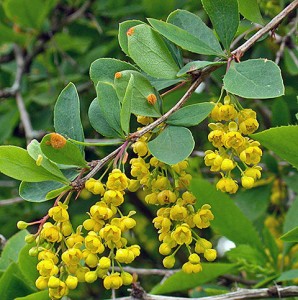 Barberry
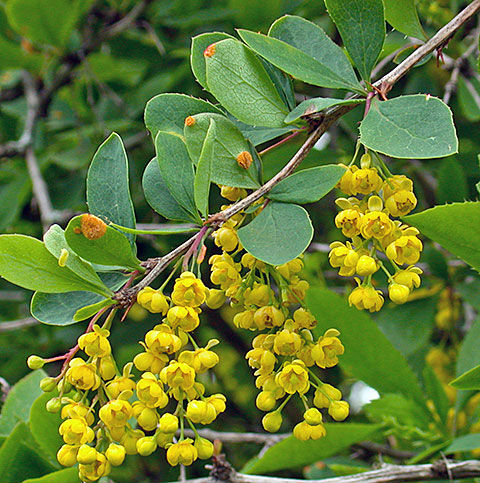
Latin name: Berberis vulgaris
Family: Berberidaceae
Part used: bark of stem and root (mainly); root, ripe berries
Habitat: native to Europe, naturalized in N. America
Main constituents: isoquinoline alkaloids (berberine, berbamine, etc.), chelidonic acid, resin, tannins
Energetics: bitter, cooling
Main herbal actions: hepatic cleansing action, anti-hemorrhagic, anti-inflammatory, antiseptic, cholagogue, anti-emetic, stimulating hypotensive
Minor herbal actions: increases platelet and white blood cell counts in leukocytopenia, sedative, antipyretic
Main medicinal uses: bacterial infections, gall bladder inflammation or stones, hepatic congestion, liver tumors, dysentery
Minor medicinal uses: malaria, enlarged spleen, pyorrhea
Preparations: tincture: 1-2 ml tid; decoction: 1 heaping tsp boiled in 8 oz water for 10-15 min, tid (note possible discrepancies for doses of different preparations)
Contraindications: pregnancy (possible), children under 2 years (possible)
Toxicity: nausea, vomiting, dizziness, faintness, convulsions, hazardous drops in blood pressure, and depression of the heart rate and breathing.
Sources: Wren, R.C. Potter’s New Cyclopaedia of Botanical Drugs and Preparations; http://www.holistic-online.com/Herbal-Med/_Herbs/h73.htm; http://www.herbalists.on.ca/resources/freeman/BERBERIS.html
Leave a Reply
You must be logged in to post a comment.