Angelica ~ Angelica archangelica
 Angelica
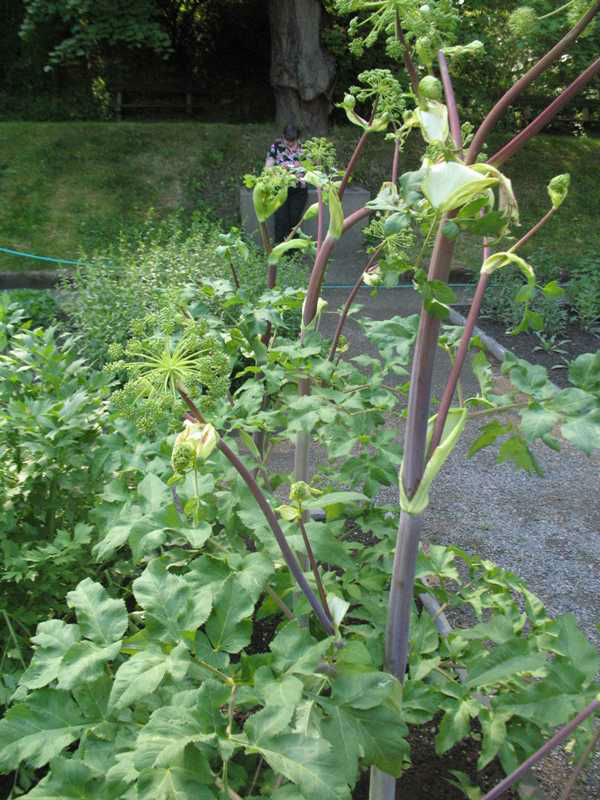
Latin name: Angelica archangelica
Family: Umbelliferae
Part used: root (mainly), seeds, leaves
Habitat: Common garden plant in Britain; grows wild in many European countries
Main constituents: volatile oil (root and seeds), coumarins (seeds), furanocoumarins (root and seed), bitters, resins, tannins, angelic acids (root)
Energetics: bitter, aromatic, sweet, warming, stimulating
Main herbal actions: expectorant, diaphoretic, carminative, diuretic
Minor herbal actions: anti-inflammatory, antimicrobial, antispasmodic, antiseptic, stimulates gastric and pancreatic secretions
Main medicinal uses: cough, cold, indigestion
Minor medicinal uses: colic with gas and eructation
Preparations: powdered root: 0.5-2 g; root tincture: 2-4 ml; root infusion: 1 tsp/cup water (note possible discrepancies for doses of different preparations)
Contraindications: concurrent use of UV-A light (may cause phototoxicity, increased risk of carcinogenesis and photodermatoses); blood thinning agent use; pregnancy
Toxicity: unknown
Sources: Sharol Tilgner, N.D.: Herbal Medicine from the Heart of the Earth; Wren, R.C. Potter’s New Cyclopaedia of Botanical Drugs and Preparations
Class notes from slide 88 – 89 – October 24th, 2012
Angelica is a European Plant. There are many poisonous plants in this family, including Hemlock, which killed Socrates.
Slide 89 shows a map
Warming digestive & Warming Respitory. Has an affinity for the torso.
Used as an expectorant – European root tincture
Tastes like anise. Stem tastes like celery.
Leave a Reply
You must be logged in to post a comment.