Loquat ~ Eriobotrya japonica
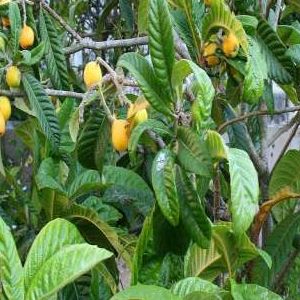 Loquat
Latin name: Eriobotrya japonica
Family: Rosaceae
Part used: leaves, flowers, fruit, leaf
Habitat: indigenous to southeastern China and possibly southern Japan; widely cultivated and naturalized
Main constituents: fruit: laevulose, sucrose and malic acid; pulp: carotenoids B-carotene (33%); y-carotene (6%); cryptoxanthin (22%), lutein, violaxanthin, neoxanthin (3-4% each); peel is 5 times richer than the pulp in carotenoids; leaves: triterpenes, tannin, vitamin B and ascorbic acid; young leaves: saponins
Energetics: leaf is bitter, cool
Main herbal actions: fruit: sedative, antiemetic, reduces thirst, antipyretic; flowers: expectorant; leaves: astringent, relieve diarrhea and depression, counteract intoxication
Minor herbal actions: antitussive, antimutagenic, antioxidant
Main medicinal uses: swellings (leaf poultices); cough, asthma, apoplexy and phthisis (flowers)
Minor medicinal uses: indigestion (tincture); calcium oxalate crystals, viral infections, stomachache, cancer
Preparations: fruits are eaten as food; infusion of leaves; tincture; fruit syrup is major Chinese cough syrup (Khalsa)
Contraindications: pregnancy
Toxicity: seeds and fruit peel contain amygdalin (cyanogenic); toxic in large quantities
Sources: http://www.hort.purdue.edu/newcrop/morton/loquat.html; cpb.pharm.or.jp/cpb/200212/c12_1619.pdf; http://www.planetherbs.com/articles/loquat_leaf.htm
Leave a Reply
You must be logged in to post a comment.