Blue Cohosh ~Caulophyllum thalictroides
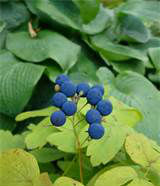 Blue Cohosh
Latin name: Caulophyllum thalictroides
(Native name means “blue root”)
Family: Berberidaceae
Part used: root
Habitat: woodlands of eastern N. America
Main constituents: methylcytisine (alkaloid), caulophyllosaponin and caulosaponin (glycosides)
Energetics: bitter, acrid, cooling (some say warming), drying
Main herbal actions: diuretic, diaphoretic, nervine, emmenagogue, parturifacient, expectorant, female reproductive tract tonic
Minor herbal actions: anthelmintic
Main medicinal uses: hot flashes (Khalsa), amenorrhea (Khalsa), reproductive tract debility due to chronic inflammatory conditions (i.e., pelvic inflammatory disease), atony and spasms of uterine tissue/muscles, uterine atrophy, dysmenorrhea, cervical varicose veins, chronic inflammatory conditions (i.e. arthritis, rheumatic conditions), stop Braxton Hicks “false” contractions
Minor medicinal uses: labor pains and after pains, male reproductive tract conditions (i.e. orchitis, impotence), epilepsy
Preparations: decoction or infusion: 1 heaping tsp/cup boiling water tid-qid (not recommended- very irritating- Khalsa); fluid extract, 10 to 30 drops qd-qid, 3-8 drops tincture per half hour for stalled labor Often combined with black cohosh as partus preparatur
Contraindications: should be used with caution in women with profuse menses, as it can increase blood flow to the pelvic region; may inhibit ovulation; CI in pregnancy prior to 9th month, angina, and cardiac insufficiency
Toxicity: symptoms include nausea, vomiting, thirst, headache, dilated pupils, muscle weakness, constriction of coronary blood vessels, CV collapse, convulsions
Sources: Sharol Tilgner, N.D.: Herbal Medicine from the Heart of the Earth; www.botanical.com
Note: Historically, there has apparently been some confusion and mixing of the properties and indications of blue cohosh and black cohosh. (These herbs are not related.) Black cohosh is a cold, bitter herb, while most authorities say that blue cohosh is warm. Blue cohosh is a blood mover. Hoffmannn says it is indicated in threatened miscarriage, due to antispasmodic action.
Module 3
Cohosh means Root – an Appalachian term. Grows in New England,Ohio and Appalachian forests. Black and Blue cohosh have nothing to do with each other.
Same family as Bayberry
Blue Cohosh is an emmenogogue. It is less researched.
The literature has gotten conflated between Blue and Black Cohosh. It makes it difficult to know who the author is.
As an Emmenogogue we are going to have more discussions in Emmenogogue section.
Blue Cohosh was used to promote contractions for birthing. There were 3 cases where there were heart damage when taking very large doses of Blue Cohosh very early on in the birthing process 2 weeks before the due date, called “Mother’s Cordial” even under the care of midwives.
Hot Flashes
Still 8 grams = 1 oz tincture bottle for hot flashes, I typically use capsules, 1 capsule the first day, 2 capsules the next day, 3 capsules the third day – this can shorten the length of menstrual cycles.
Leave a Reply
You must be logged in to post a comment.