Oak ~ Quercus robur
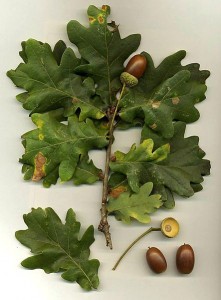 Oak
Oak
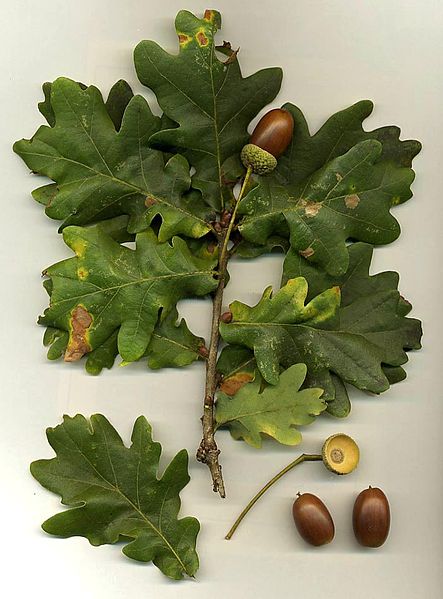
Latin name: Quercus robur
Family: Fagaceae
Part used: bark
Habitat: native to Europe
Main constituents: tannins (phlobatannin, ellagitannins, gallic acid)
Energetics: astringent, bitter, neutral
Main herbal actions: astringent, hemostatic,
Minor herbal actions: antiseptic
Main medicinal uses: diarrhea, hemorrhoids (enema), yeast
Minor medicinal uses: throat problems (gargle), gonorrhoea, leucorrhoea, and vaginitis (topical)
Preparations: tincture: 0.5-5 ml qd; decoction; tincture: 1-2 ml qd, capsules: up to 5 grams qd
Contraindications: constipation
Toxicity: can induce constipation
Sources: Wren, R.C. Potter’s New Encyclopedia of Botanical Drugs and Preparations; http://www.ibiblio.org/herbmed/eclectic/bpc1911/quercus.html; http://www.ann.com.au/herbs/Monographs/quercus.htm
Oak Module 2 lecture
- Read Oak in Europe
- White Oak in North America
- Part used: Bark
- Astringent, taninnins
- Used for: Diarrhea, hemorrhoids (enema, poultice), and yeast
- Quercetin comes from Oak
- Oak is used to tan hides, thus tannins
- Tannins are toxic to yeast
Oak Module 3 notes page 32
Astringent herbs include:
Leave a Reply
You must be logged in to post a comment.