Caraway ~ Carum carvi
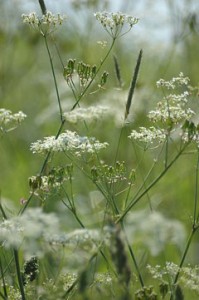 Caraway
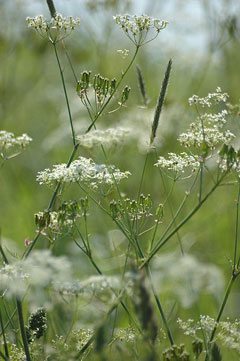
Latin name: Carum carvi
Family: Umbelliferae
Part used: fruit (seeds)
Habitat: native to Europe, Asia, and N. Africa; widely cultivated
Main constituents: essential oil (arvene, carvone, limonene), linoleic acid, oleic acid, flavonoids, polysaccharides, tannins, coumarins, resin, calcium oxalate
Energetics: pungent, warm, spicy
Main herbal actions: carminative, antispasmodic, stomach tonic, galactogogue
Minor herbal actions: antiseptic, aperitive, aromatic, astringent, circulatory stimulant, digestive tonic, diuretic, emmenagogue, expectorant, stimulant, tonic, vermifuge
Main medicinal uses: colic, cramps, Crohn’s disease, dyspepsia, flatulence, hiccups
Minor medicinal uses: dysmenorrhea, hysteria, wheezing, bruises (topical poultice), bronchitis, chemotherapy-induced nausea,
Preparations: infusion: 1 tsp crushed seed/cup water; 1:2.5 dry tincture: 20-30 gtt qd-qid; capsules: 0.5-2 g qd
Contraindications: unknown
Toxicity: unknown
Sources: Sharol Tilgner, N.D.: Herbal Medicine from the Heart of the Earth; Wren, R.C. Potter’s New Encyclopedia of Botanical Drugs and Preparations; http://www.vitamincity.com/herbs/caraway.htm
Â
Caraway Module 2 lecture
- Carminative (everything in the Umbelliferae family is carminative)
- Apiaceae
- Photohormones (mild) – emmenagogue, galactogogue, culinary spice
- Realistically it is not too potent
- Not anything too special
- Caraway, Anise, Cumin, Fennel are all parsley seeds
Leave a Reply
You must be logged in to post a comment.