Garlic ~ Allium sativa
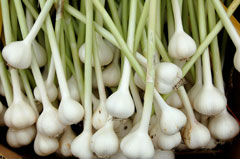
Latin name: Allium sativa
Family: Liliaceae
Part used: bilb (cloves)
Habitat: cultivated worldwide
Main constituents: volatile oil (allicin); B vitamins, mineral flavonoids
Energetics: heating, stimulating, drying
Main herbal actions: antibacterial, antifungal, antiparasitic, carminative, natriuretic
Minor herbal actions: anticoagulant, antithrombotic, hypotensive, hypocholesterolemic, antidiabetic
Main medicinal uses: bacterial infection, hypertension, atherosclerosis, dysentery, diabetes
Minor medicinal uses: colds, flu, asthma, bronchitis
Preparations: 1:1 tincture: 30-60 gtt qd-qid; fresh clove with food
Contraindications: patients with hot constitutions; acute inflammation, insomnia, dehydration, hypoglycemia, pemphigus, impending surgery (possible), organ transplants, concomitant use of anticoagulants; large amounts can inhibit iodine uptake by thyroid
Toxicity: may cause GI upset in sensitive individuals
Sources: Sharol Tilgner, N.D.: Herbal Medicine from the Heart of the Earth; Wren, R.C. Potter’s New Cyclopaedia of Botanical Drugs and Preparations
———————————————————————-
Garlic (circulatory slide 48)
Found in:
Garlic is an Ayurvedic Herb that is in the medicine cabinet for the heart. It’s just an overall panacea for the heart.
In Western Herbalism it is used to warm the heart and does many different things. It warms up the circulation a little bit and is a vasodilator that enhances the volume of the blood compartment and allows blood to get to various places.
Lowers cholesterol a little bit and lowers blood pressure.
For all that garlic does for the cardiovascular system, it’s not the best for any of them. It’s a very general herb.
 Garlic – page 85-86 in Healing with the Herbs of Life
Uses:
- Stimulates metabolism
- treats respitory conditions
- colds, flu, sore throats
- infections
- earaches
- lung ailments
Leave a Reply
You must be logged in to post a comment.