American Ginseng ~ Panax quinquefolius
American Ginseng
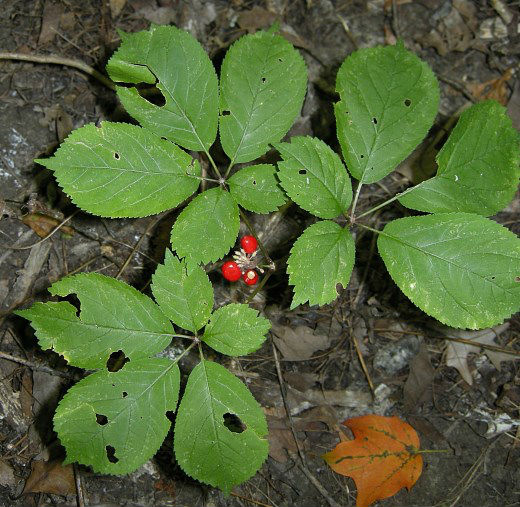
Latin name: Panax quinquefolius
Family: Araliaceae
Part used: root
Habitat: Eastern hardwood forests
Main constituents: saponin glycosides (ginsenosides), glycans, volatile oil
Energetics: sweet, slightly bitter
Main herbal actions: adaptogen, rejuvenative, general tonic, antispasmodic, nervine, supports nervous and endocrine systems, enhances metabolic activity in the brain
Minor herbal actions: antioxidant, antifatigue, anti-ulcer, demulcent, immune system stimulant
Main medicinal uses: enhances performance, stamina, and memory; general weakness, impotence, forgetfulness, chronic fatigue
Minor medicinal uses: cerebral ischemia, anemia, decreases susceptibility to illness, muscular tension, cough
Preparations: infusion: 1 tsp/cup water; tincture: 20-60 gtt 1-4x/day (tincture not traditional preparation- Khalsa)
Contraindications: concurrent use with phenelzine
Toxicity: relatively safe long-term
Sources: Sharol Tilgner, N.D.: Herbal Medicine from the Heart of the Earth; Wren, R.C. Potter’s New Cyclopaedia of Botanical Drugs and Preparations; http://www.herbalists.on.ca/resources/freeman/PANAXQUI.html
Class lecture notes October 24th, 2012
99% exported to Asia. Mostly from Wisconsin – grown as agri-business.
Grown Wild or semi wild in the forest from North Carolina.
Slide 57 shows a map of where ginseng has been found (not by density)
White Ginseng means not processed
Ginseng: Tonic for endurance, oxygen saturation, mood, fatigue, and blood sugar levels
Ginseng is the most widely used herb on the planet
TCM says American Ginseng (white) is cooling and Asian Ginseng (red) is warming.
In America, Ginseng is grown in the woods under natural conditions – semi wild or wild.
Woods growing starts are grown in the first year, then planted in the forest.
Prime of life is 7 years
Wild Manchurian Ginseng goes for $1,000/ounce
Not much fungicide in Ginseng anymore.
end of slide 87
Leave a Reply
You must be logged in to post a comment.