Oat straw ~ Avena sativa
Oat straw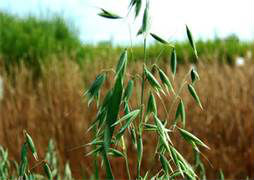
Latin name: Avena sativa
Family: Gramineae
Part used: whole plant, including leaves and stem; oat seeds are used as well
Habitat: crop land
Main constituents: straw: saponins, flavonoids, starch, alkaloids (trigonelline, avenine), steroids, calcium, iron, B vitamins; seeds: avenins, flavones, avenacosides, vitamin E, silicon source (Khalsa)
Energetics: sweet, moistening
Main herbal actions: diuretic, nerve tonic, antidepressant, antispasmodic; seeds: antidepressant, thymoleptic, cardiac tonic, sedative
Minor herbal actions: rejuvenate
Main medicinal uses: rheumatic conditions, fluid retention, shingles, herpes infection
Main medicinal uses attributed to oat straw, but probably milky oat seed: addictions (such as tobacco-milky oat seed might be more appropriate), insomnia, depression, nervous debility and exhaustion
Minor medicinal uses: generally weakened constitutions, dry, irritated skin, eczema, urinary congestion
Preparations: liquid extracts, tinctures, tea, powder
Contraindications: unknown
Toxicity: unknown
Sources: http://www.libertynatural.com/database/lh93.htm; Sharol Tilgner, N.D.: Herbal Medicine from the Heart of the Earth; Wren, R.C. Potter’s New Encyclopedia of Botanical Drugs and Preparations
Note: Historically, the properties and actions of seed and straw have probably become overlapped. Straw is mainly a bone and joint remedy, while green milky seed is sedative.
Module 3
High silicon content
Bone Healing
Milky seed of the oat is used for Neurotroporestorative – usually used as tincture. KP doesn’t use it, but some herbalist swear by it.
Tinctures – alcohol – is not a good choice for nerves because it suppresses the nervous system – counterproductive.
This is where “sowing your wild oats” comes from. Slightly aphrodisiac.Milky Oats is better decocted. It doesn’t need to be tinctured. Best fresh. Not good dried, as it loses its …
Leave a Reply
You must be logged in to post a comment.